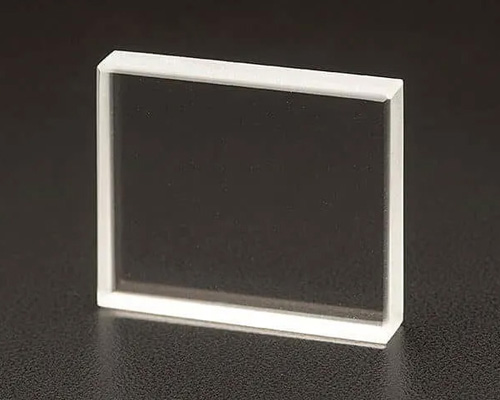
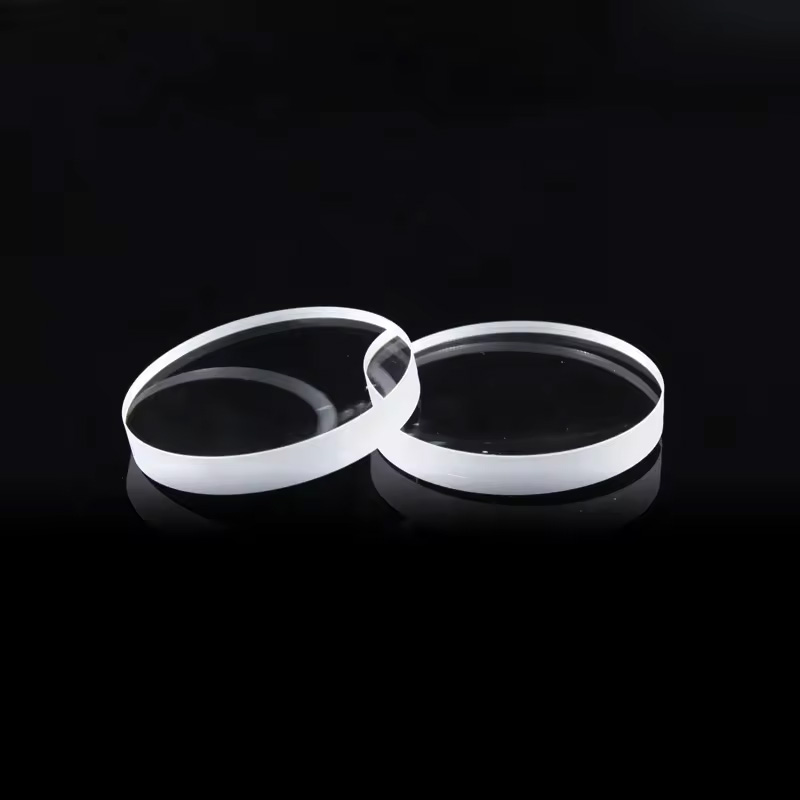
What Is a BK7 Optical Window?

Although it may look like an ordinary piece of glass, a BK7 optical window is manufactured under strict optical tolerances. The material is selected for its uniform refractive index, low internal stress, and excellent polishability.

A BK7 window is designed to allow light to pass through without introducing beam deviation, focus shift, or wavefront distortion. This makes it suitable not only as a protective cover but also as an optically active component in imaging paths, interferometric setups, and laser systems operating at moderate power levels.

Custom Specifications for BK7 Windows

BK7 optical windows can be produced in a wide range of dimensions and tolerances, from simple protective covers to precision optical flats used in metrology and imaging systems.

Typical specification ranges include:

  • Diameter: ~2 mm to 350 mm

  • Thickness: 0.5 mm to 50 mm

  • Surface flatness: λ/4 up to λ/20

  • Surface quality (Scratch/Dig): 40-20, 20-10, 10-5

  • Parallelism: down to a few tens of arcseconds

  • Clear aperture: typically >85%

Exact capabilities depend on window size, thickness, and application requirements, but these values represent what is commonly achievable in commercial optical manufacturing.


Why BK7 Is Widely Used in Optical Design

BK7 offers a clean and predictable transmission profile from the visible spectrum into the near-infrared. In a 10 mm thick sample, internal transmission typically exceeds 90% across much of this range.

While BK7 is not optimized for deep-UV applications or high-power laser environments, it performs exceptionally well for everyday VIS–NIR systems. Its moderate hardness, good chemical stability, and resistance to scratching make it suitable for long-term use in laboratory and industrial settings.

From a design perspective, BK7 provides consistent optical properties that designers can rely on, simplifying modeling and system optimization.
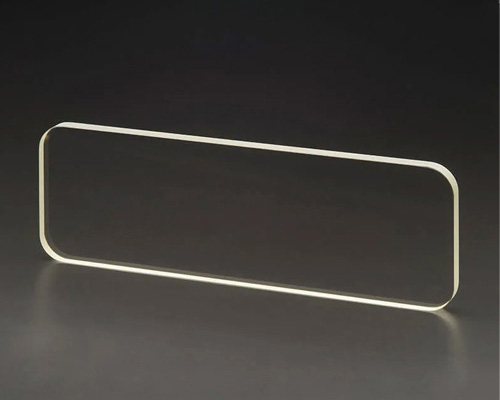
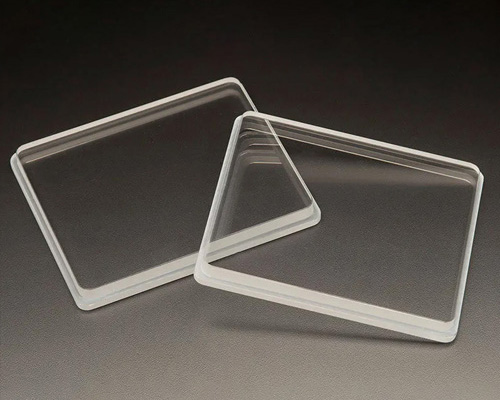
Anti-Reflection and Functional Coating Options

An uncoated BK7 surface reflects approximately 4% of incident light per surface, which can be unacceptable in precision optical systems. To improve transmission and reduce stray reflections, BK7 windows are frequently supplied with optical coatings.

Common coating options include broadband AR coatings for the visible, VIS–NIR, or NIR ranges, as well as narrowband V-coatings for specific laser wavelengths such as 532 nm or 1064 nm. Depending on the application, additional coatings such as beamsplitter coatings, high-reflection (HR) coatings, or protective overcoats may also be applied.

Coating selection is typically driven by wavelength range, angle of incidence, and environmental conditions.

Typical Optical Constants and Transmission Range

Some of the commonly referenced optical properties of BK7 include:

  • Refractive index (nd @ 587 nm): 1.5168

  • Abbe number: 64.2, indicating relatively low chromatic dispersion

  • Transmission range: approximately 350 nm to 2.0 μm

These constants make BK7 a well-balanced material for imaging optics, sensor windows, and general-purpose optical assemblies.

Contact Us Now