
Metallic Mirrors
- Home
- portfolio
- Optical Mirror
- Metallic Mirrors
Metallic mirrors
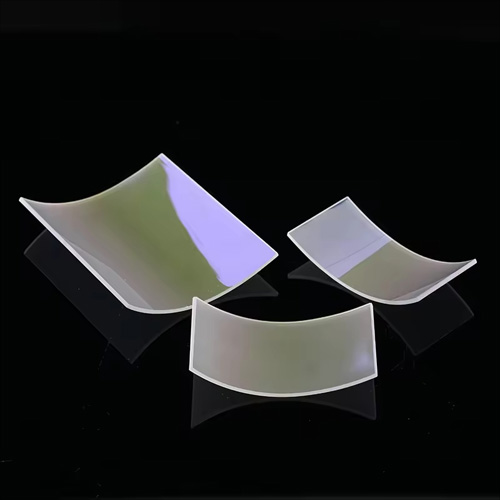
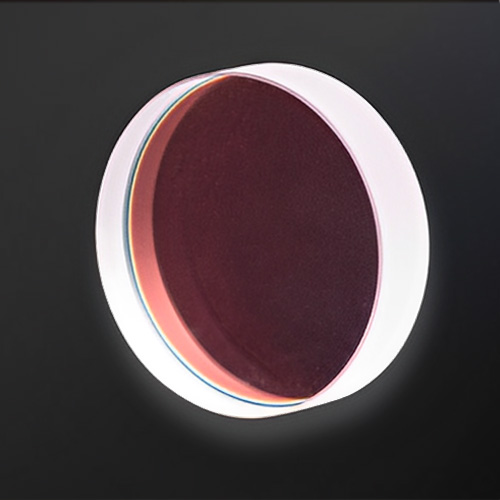
Metallic mirrors are optical mirrors that achieve reflection through a thin metallic coating deposited on a precision optical substrate. Unlike dielectric mirrors, metallic mirrors provide broadband reflectivity with minimal dependence on angle of incidence or polarization, making them a practical solution for many imaging, illumination, and laser-based optical systems.
At Star-optics, we manufacture custom metallic mirrors for customers working in industrial optics, medical instrumentation, scientific research, aerospace, and defense applications, where stable broadband performance and mechanical reliability are required.
Types of Metal Mirrors
The selection of metal mirrors usually depends on the wavelength range of concern, environmental conditions, and usage requirements. Our coating materials include aluminum, silver, and gold, each of which has unique spectral and mechanical properties.
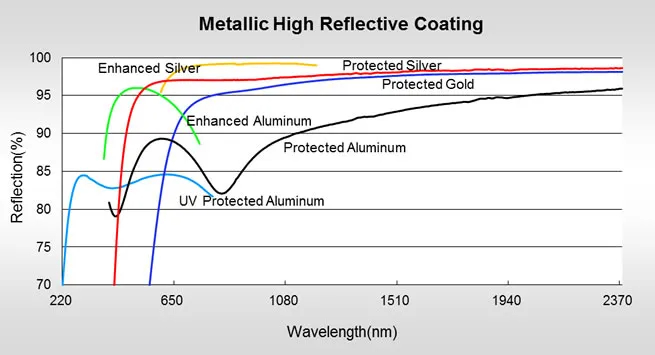
Standard metal reflectors can reflect approximately 85% to 98% of incident light within their optimized wavelength range. This reflectivity is typically lower than that of narrowband dielectric reflectors, but the metal coating provides a wider spectral coverage and more stable performance at different angles.
- Aluminum metal mirror surface:Aluminum is the most widely used coating material for metal mirrors, with a spectral coverage range from ultraviolet to visible light to near-infrared light. Aluminum is often used in general optical systems, beam steering components, and lighting optical devices.
In most applications, the aluminum coating is covered by a thin protective layer – silicon dioxide (SiO) or dielectric layer – to enhance wear resistance and environmental stability. - Silver metal mirror surface:Silver has the highest reflectivity in the visible spectrum, especially in the range of 450 to 800 nanometers. It is often used in imaging systems, spectrometers, and low-light optical devices.
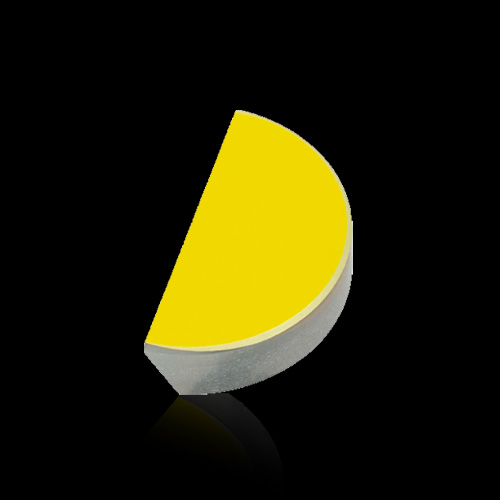
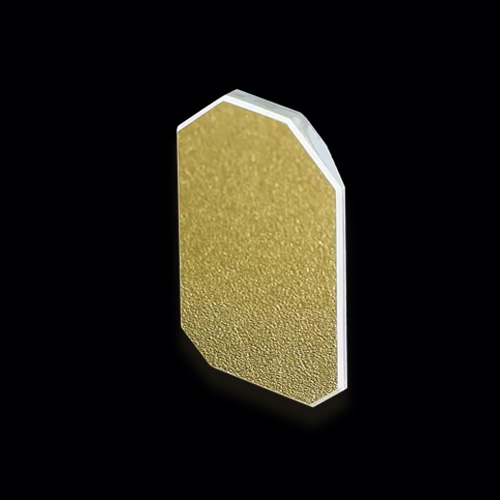
Pure silver is chemically sensitive and prone to discoloration, so for long-term use or any operations involving contact, it is recommended to use a protective coating. - Gold metal reflector:Gold coatings are optimized for near-infrared and infrared applications, typically performing best in the range of approximately 750 nanometers to mid-wave and long-wave infrared. Gold reflectors are widely used in infrared laser systems, thermal imaging, and infrared optical paths.
Custom Metallic Mirrors at Star-optics
When specifying a metallic mirror, coating performance is only part of the equation. Substrate quality, surface figure, roughness, coating uniformity, and environmental durability all play a role in system performance.
At Star-optics, our optical engineers work directly with customers to define coating materials, protective layers, substrates, and tolerances based on real operating conditions—not just nominal specifications. Each metallic mirror is manufactured and inspected to ensure it meets the intended optical and mechanical requirements.
If you need a custom metallic mirror designed for your application, contact Avantier to discuss your specifications or schedule an initial consultation.