
Infrared Mirrors
- Home
- portfolio
- Optical Mirror
- Infrared Mirrors
Infrared Mirrors
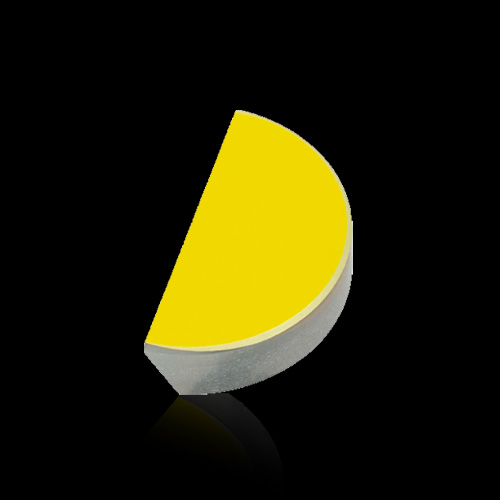
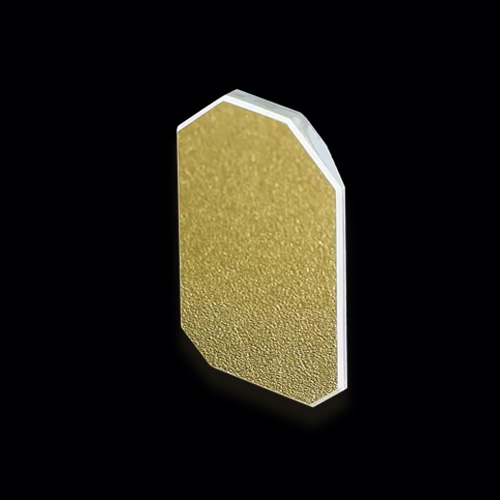
Infrared mirrors (IR mirrors) are optical components designed to efficiently reflect infrared radiation across the near-infrared (NIR), mid-infrared (MIR), and far-infrared (FIR) spectral ranges. They are commonly used in beam steering, optical path folding, thermal control, and infrared measurement systems.
At Star-Optics, we manufacture custom infrared mirrors in-house, supporting customers in industrial processing, scientific research, medical systems, and defense applications.
Types of Infrared Mirrors
Infrared mirrors are typically classified by coating technology and operating wavelength range. The choice of coating directly affects reflectivity, environmental stability, and angular performance.
Metallic Infrared Mirrors
Metallic coatings remain the most common solution for infrared mirrors due to their broad spectral coverage and low sensitivity to angle of incidence and polarization.
Typical metallic coatings include aluminum, silver, and gold, all of which can be supplied with optional protective layers such as SiO or SiO₂ to improve mechanical durability and chemical resistance.
Near-Infrared (NIR):
Aluminum or silver coatings, optionally protected with SiO₂ or Y₂O₃Mid-IR and Far-IR (IR / FIR):
Gold coatings, optionally protected with SiO₂ or Y₂O₃
Depending on wavelength and coating design, metallic IR mirrors generally achieve 85% to 98% reflectivity. While this is lower than narrowband dielectric designs, metallic mirrors provide consistent performance across wide wavelength ranges and varying incident angles.
Dielectric Infrared Mirrors (NIR)
Dielectric infrared mirrors are optimized for near-infrared wavelengths, typically between 800 and 1600 nm. These mirrors employ multilayer dielectric interference coatings to achieve very high reflectivity, which can exceed 99.7% at specified wavelengths and angles of incidence.
Compared with metallic designs, dielectric infrared mirrors offer higher peak reflectance and better mechanical stability without requiring protective overcoats. However, their usable spectral bandwidth is narrower, and optical performance is more sensitive to angle of incidence and polarization, which must be defined during system design.
Custom Infrared Mirrors (IR Mirrors) at Star-optics
When specifying an infrared mirror, coating selection is only one part of the solution. Substrate quality, surface figure, roughness, coating uniformity, and environmental durability all directly impact system performance.
At Star-Optics, our engineers work closely with customers to define coating materials, protective layers, mirror geometry, and tolerances based on real operating conditions. Each infrared mirror is manufactured and inspected to meet the intended optical and mechanical requirements.
If you require a custom infrared mirror or need technical guidance, please contact us to discuss your specifications.