Spherical Lenses
- Home
- Spherical Lenses
Spherical Lenses Overview
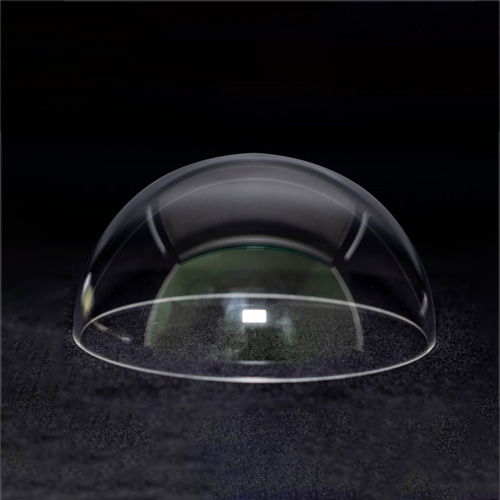
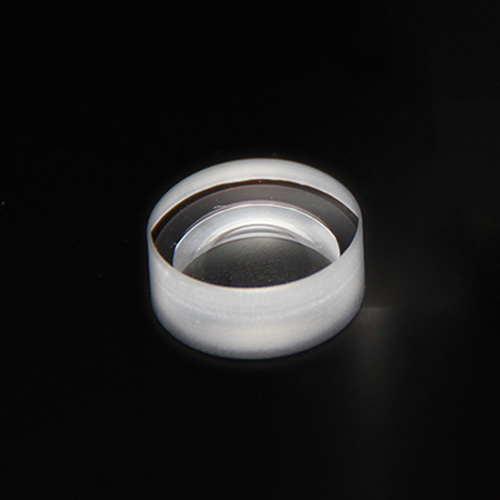
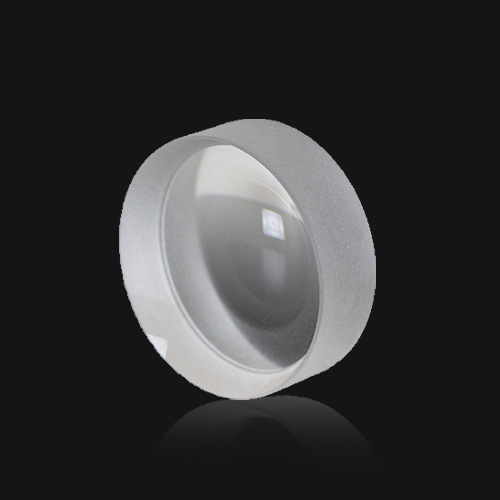
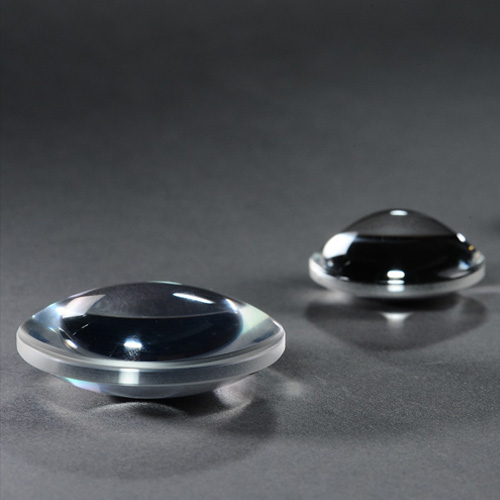
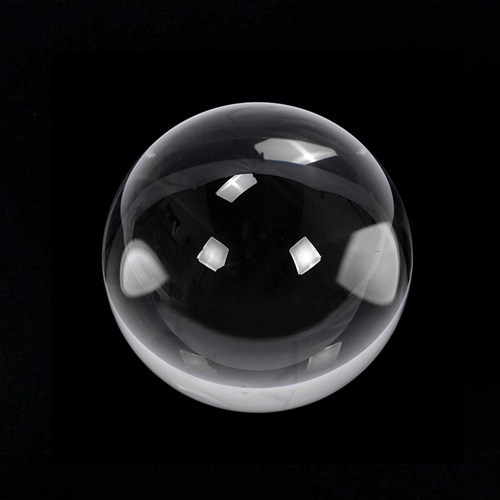
Spherical lenses are fundamental optical components featuring one or two spherical surfaces designed to converge or diverge light. Due to their mature manufacturing process, stable performance, and cost efficiency, spherical lenses are widely used in imaging systems, laser optics, machine vision, medical instruments, and scientific equipment.
Star-optics supplies precision spherical lenses with consistent optical quality, offering flexible customization in geometry, material selection, surface quality, and optical coatings. From prototype development to volume production, our manufacturing capabilities ensure reliable performance across a wide range of optical applications.

Type of Spherical Lenses
We deliver off-the-shelf items and fully customized filters tailored in wavelength, bandwidth, OD blocking, substrate, and coating architecture — from prototype runs to volume production.
Advanced Manufacturing for High-Precision Spherical Lenses
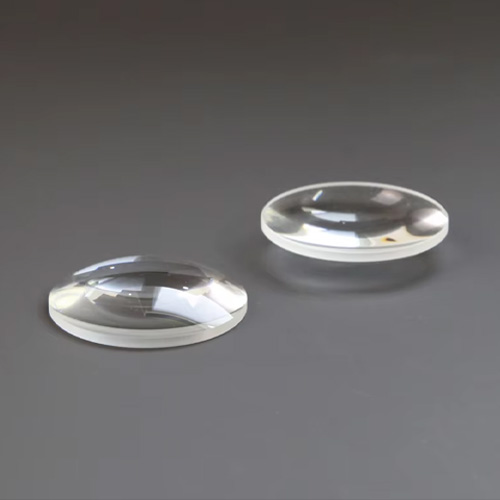
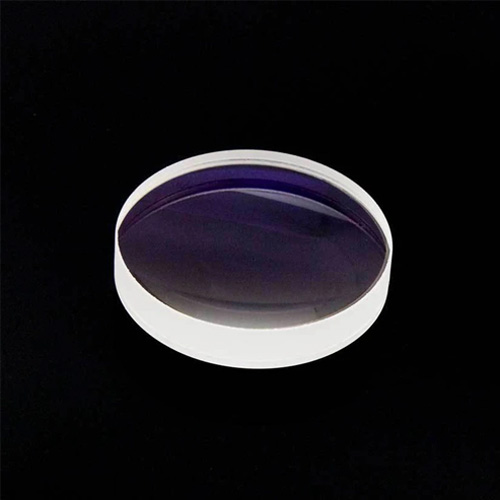
Star-optics delivers high-performance spherical lenses engineered for UV, visible, and NIR optical systems that demand precise beam shaping and low-aberration performance. We manufacture lenses from fused silica, optical glass, and specialty crystalline materials such as CaF₂ and MgF₂ to support applications ranging from imaging and illumination to laser beam conditioning. Our production capabilities cover micro-scale to large-format diameters, including plano-convex, plano-concave, bi-convex, and bi-concave geometries. To ensure maximum transmission and system efficiency, we apply advanced thin-film coatings tailored to each wavelength band. Coating options include broadband AR, V-coats, and high-damage-threshold designs produced using Ion Beam Sputtering (IBS) and Magnetron Sputtering, enabling outstanding surface stability and environmental durability for precision optical assemblies.
Custom Spherical Lens
• Diameter range: 1–150 mm
• Material options: Fused Silica, N-BK7, CaF₂, Si, Ge
• Surface quality: 10/5 scratch–dig
• Surface figure: up to λ/10 @ 632.8 nm
• Centration: ≤3 arcmin
• Coating options: UV / VIS / NIR AR coatings, laser-grade coatings
• Tolerance: diameter +0 / –0.005″; thickness ±0.005″
Our engineering team will evaluate your drawings, optical requirements, and application environment, then provide a detailed quotation and feasible manufacturing recommendation. We routinely support precision custom lens fabrication with the following capabilities:
FAQS
What is a spherical lens?
A spherical lens is an optical element whose surface curvature is part of a sphere. By converging or diverging light, spherical lenses are used for beam shaping, imaging, collimation, and focusing across laser, biomedical, and industrial optical systems.
What materials are commonly used for spherical lenses?
We manufacture spherical lenses using a wide range of optical materials, including:
• Fused silica (UV–NIR)
• BK7 and other optical crown glasses
• Sapphire
• CaF₂ / MgF₂ crystalline substrates
• Borosilicate glasses
Material selection depends on wavelength range, thermal stability, and laser-damage resistance.
Can you customize focal length and curvature radius?
Yes. Focal length, radius of curvature, diameter, center thickness, coating, and surface figure can all be fully customized based on your optical design or drawings.
What wavelengths do your spherical lenses support?
We cover applications from deep UV (190 nm) to mid-infrared (3–5 μm) depending on the material. AR coatings can be optimized for specific laser lines (e.g., 266 nm, 355 nm, 532 nm, 1064 nm) or broadband ranges.
How do I choose the right spherical lens for my system?
Selection depends on:
• Wavelength or laser line
• Required focal length
• Beam diameter and divergence
• Application type (imaging, collimation, focusing)
• Desired aberration control
• Environmental or power-handling requirements
Our technical team can assist with lens design and material selection.