
Ball Lenses
- Home
- portfolio
- Spherical Lenses
- Ball Lenses
Ball Lenses
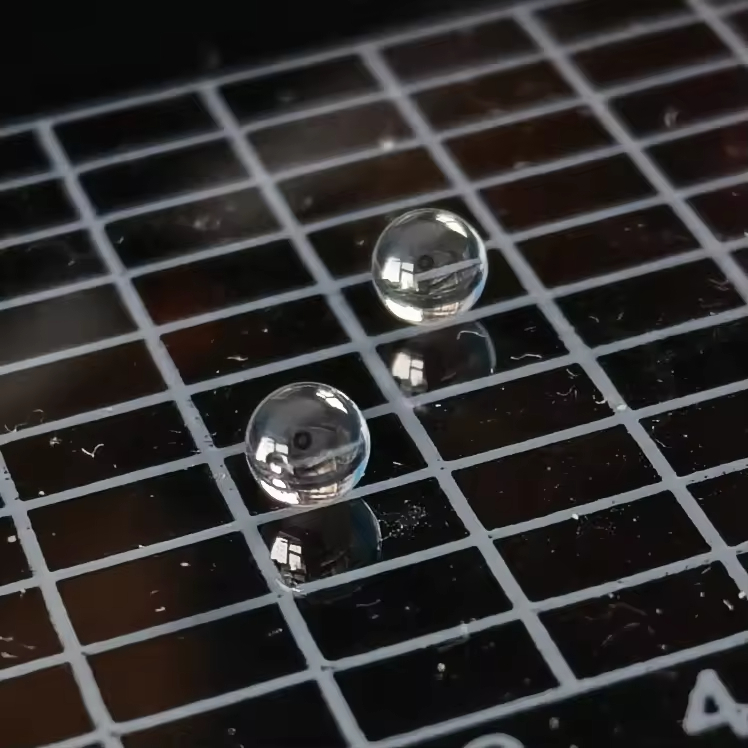
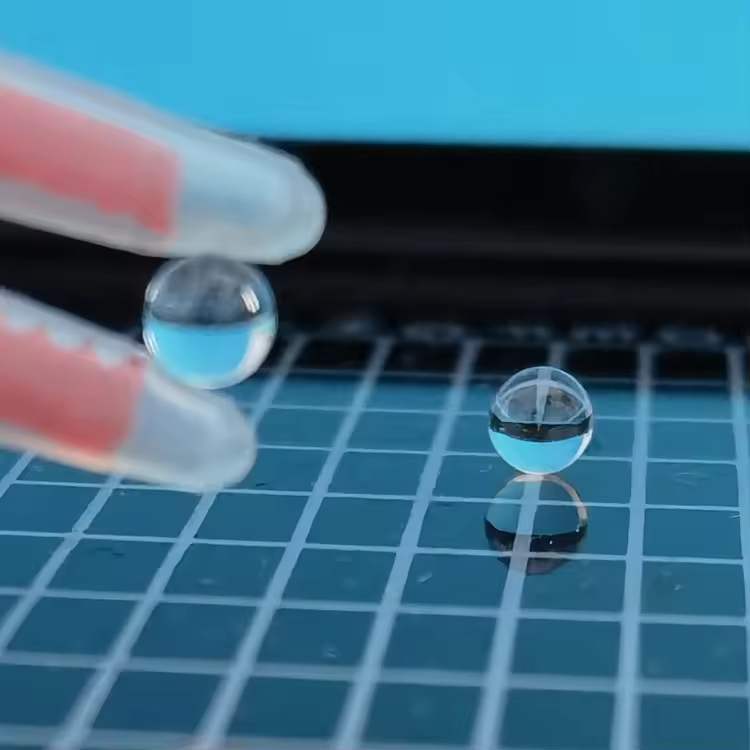
Ball lenses are spherical optical components that improve signal coupling between fibers, emitters, and detectors. Their perfectly round geometry enables precise beam focusing and collimation in compact spaces. Avantier manufactures ball lenses from optical glass, UV fused silica, sapphire, and infrared materials for fiber optic coupling, endoscopy, barcode scanning, and miniature optical systems.
Material Options for Different Applications
Glass Ball Lenses are made from BK7 or fused silica glass and work well for visible light. They come in many sizes and are used in common optical systems.
UV Fused Silica Ball Lenses let ultraviolet light pass through. They are used in spectroscopy and instruments that need UV light.
Sapphire Ball Lenses are harder than glass and don’t scratch easily. Sapphire works at high temperatures, so these lenses are used in tough conditions.
Silicon Ball Lenses let infrared light pass through (1-7μm range). They are used in thermal cameras and infrared equipment.
High Index Ball Lenses are made from glass with higher refractive index. This makes the focal length shorter, which helps when space is limited.
AR Coated Ball Lenses have coatings that reduce reflection. More light passes through these lenses.
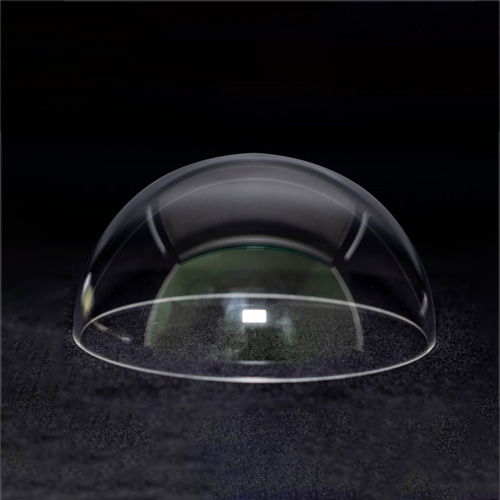
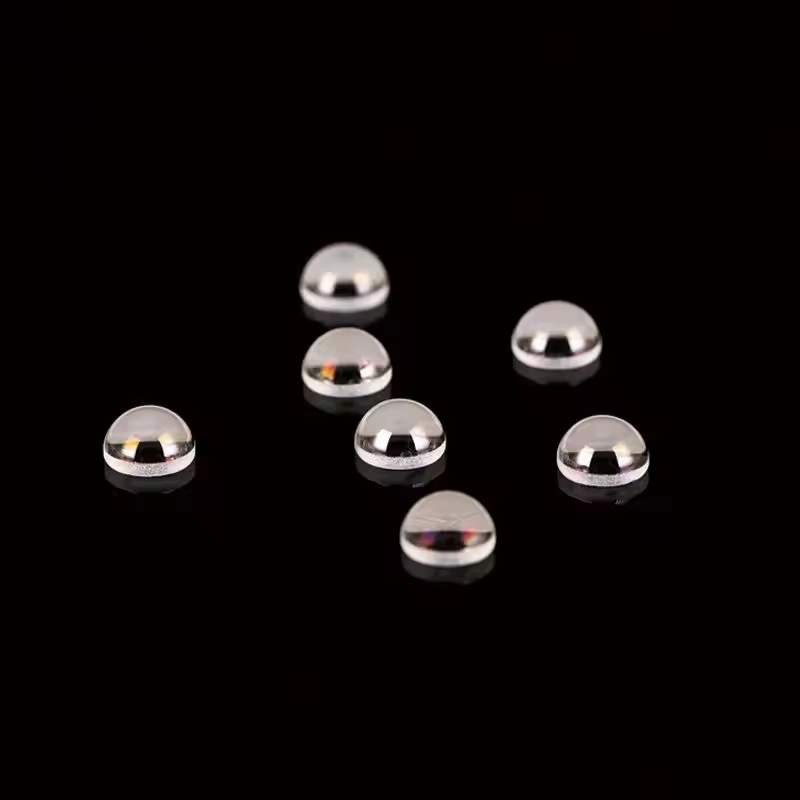
Half Ball Lenses are shaped like half a sphere. They are used to focus or spread light in small spaces.
Micro Balls are very small, less than one millimeter wide. They are used in tiny optical devices.
Understanding Ball Lens Parameters
Four main measurements are used to describe ball lenses: diameter (D), effective focal length (EFL), back focal length (BFL), and refractive index (n).
Effective focal length is the distance from where light focuses to the center of the lens. It can be calculated with this formula: EFL = nD / 4(n-1), where n is refractive index and D is diameter.
Back focal length is the distance from the focus point to the lens surface. BFL is always equal to EFL minus the lens radius.
Numerical aperture is related to the lens diameter, refractive index, and light source size. When connecting components, matching the numerical aperture helps light pass through better.
Ball lenses bend light unevenly because of their spherical shape. This issue becomes more noticeable when the light beam is close to the size of the lens. For applications where this matters, aspheric lenses work better.
Specifications
| Parameter | Specification |
|---|---|
| Diameter | 0.5mm – 50mm |
| Diameter Tolerance | ±0.05mm |
| Sphericity | ≤ 0.05mm |
| Surface Quality | 40-20, 20-10 |
| Material | BK7, fused silica, UV fused silica, sapphire, silicon |
| Coating | Uncoated or AR coated per specification |
Why Ball Lenses
Ball lenses are used in fiber optic systems, small endoscopes, barcode scanners, and microscope objectives. Because they are round, they don’t need precise alignment when rotating. Their small size makes them fit in tight spaces where regular lenses won’t work.
We make custom ball lenses based on your wavelength, size, and coating needs. Our grinding and polishing keeps the lenses very round, which is important for connecting optical parts.
Contact us to discuss your ball lens requirements.