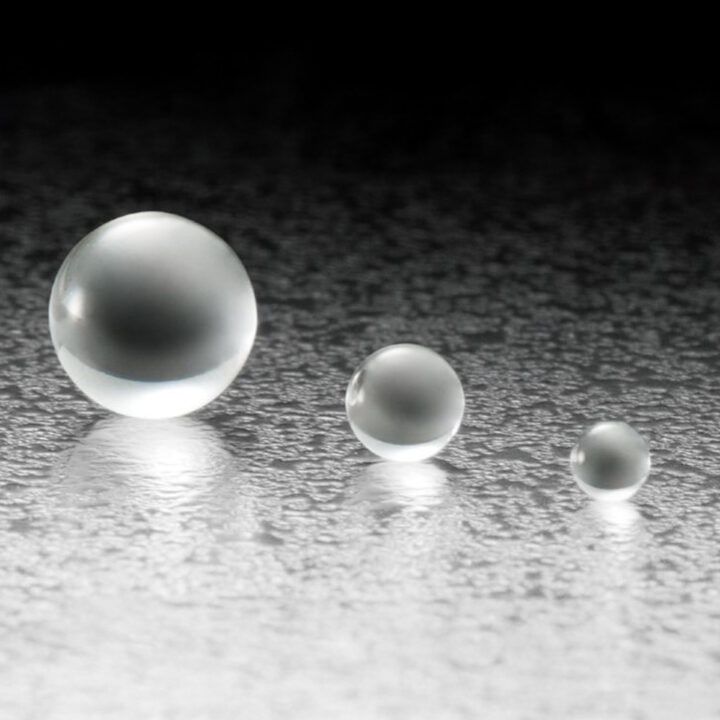
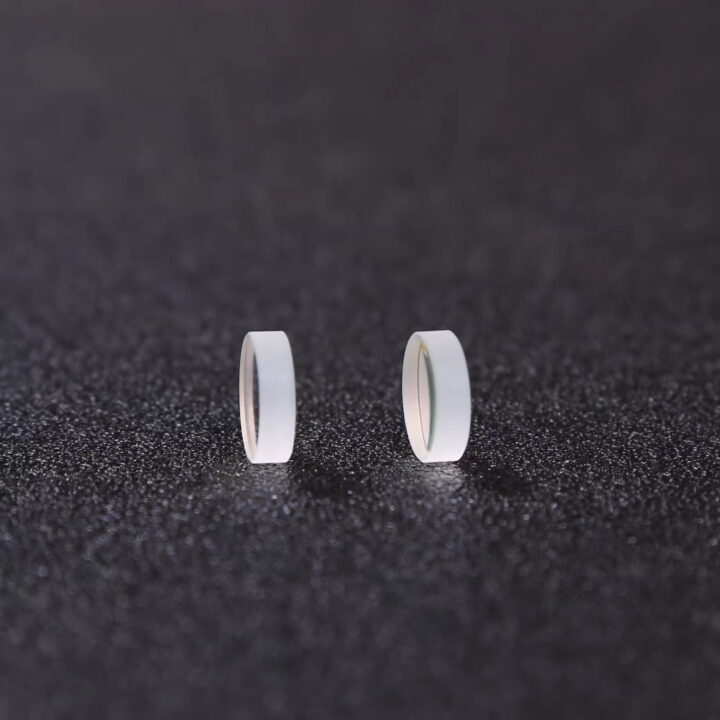
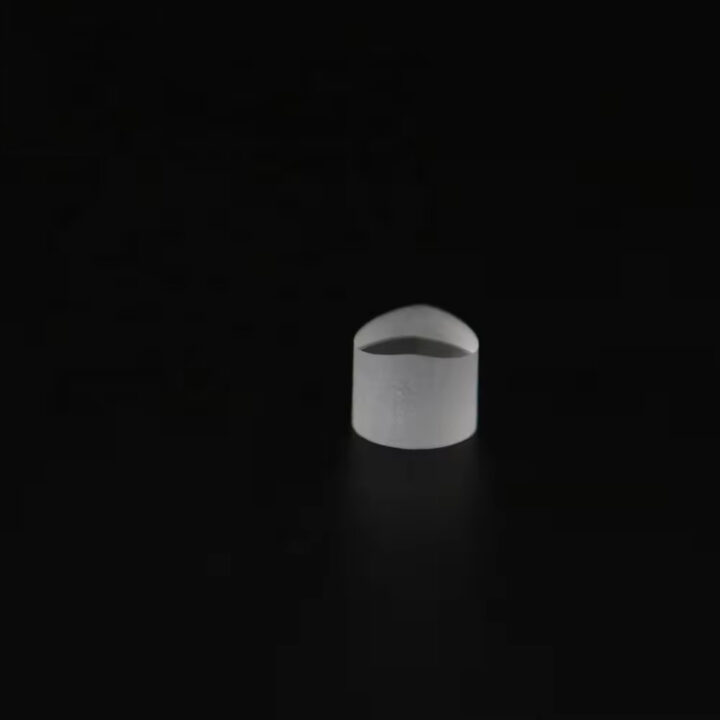
At Star Optics, we manufacture micro lenses, micro lens arrays (MLAs), beam-shaping micro structures, and custom-designed micro optical elements with dimensional tolerances and surface quality optimized for the most demanding imaging, sensing, laser, and semiconductor applications.
Our micro-optics are engineered at scales where even sub-micron deviations can significantly alter optical performance. To meet these requirements, we integrate high-precision CNC micro-machining, advanced molding and grinding technologies, thin-film deposition for multi-band coatings, and stringent cleanroom processes. This combination allows us to deliver micro-optical components with unparalleled uniformity, optical efficiency, and long-term stability.
Design Collaboration and Custom Micro-Optical Engineering
Most micro-optics used in modern devices are not off-the-shelf components; they must be engineered around specific beam characteristics, wavelengths, packaging constraints, and system tolerances. Star Optics provides comprehensive design services that integrate optical simulation, CAD/CAM modeling, material selection, and tolerance analysis.
Our custom engineering workflow includes:
Optical design and simulation
Each project starts with system-driven optical modeling. Ray-tracing and wavefront analysis are used to optimize numerical aperture, focal length, and aberration balance, while manufacturability and cost trade-offs are addressed early in the design phase.
Material optimization
Material selection considers spectral transmission, dispersion, thermal behavior, and environmental stability. Coating compatibility and integration with bonding or mechanical mounts are evaluated to ensure long-term system reliability.
Micro-geometry development
Curvature profiles, sag depth, and thickness are refined to control aberrations and maintain tolerance stability. When required, aspheric or freeform surfaces are introduced and validated for production consistency.
Prototype fabrication
In-house tooling and polishing setups enable rapid prototyping for optical verification and mechanical fit testing, reducing development cycles before volume production.
Transition to volume production
After design freeze, lenses move to controlled, repeatable polishing processes supported by full optical inspection to ensure consistency across production runs.
Coating design and integration
AR, HR, dichroic, or laser-line coatings are engineered to match lens curvature and wavelength requirements, delivering low reflection, high durability, and reliable laser performance.
Optical Performance and Engineering Principles
The performance of micro optics is governed by complex interactions between geometry, surface micro-roughness, refractive index uniformity, and the behavior of light at micro-scale apertures. For example, slight variations in lens sag height directly influence focal length, and micron-level pitch errors in MLAs can introduce phase noise and beam non-uniformity. To ensure consistent optical behavior, Star Optics manufactures all surfaces—whether spherical, aspherical, or freeform—with tightly controlled form accuracy (typically down to ±0.1–0.5 µm at the lens level) and nanometric surface roughness (<1 nm Ra for selected materials).
FAQS
What is considered micro optics?
Micro optics typically refers to optical components with feature sizes or overall dimensions in the millimeter to sub-millimeter range. These include micro lenses, micro lens arrays (MLAs), micro prisms, and other precision elements used for beam shaping, coupling, or imaging in compact optical systems.
What materials are commonly used for micro optics?
Micro optics are commonly manufactured from fused silica, optical glasses, and selected crystalline materials depending on wavelength and application. Material selection is driven by transmission requirements, refractive index control, thermal stability, and compatibility with micro-fabrication and coating processes.
How do micro optics differ from standard optics in performance?
Because of their small size, micro optics are more sensitive to surface errors, centration, and alignment. Precision control of curvature, sag, and thickness is critical to maintain optical performance, especially in high-NA or laser-based systems.
What industries commonly use micro optics?
Micro optics are used in medical devices, life sciences, consumer electronics, optical communications, sensing, metrology, and industrial laser systems—especially where compact size and precise optical control are required.
What coating options are available for micro optics?
Coating options include broadband AR, laser-line AR, HR, dichroic, and custom spectral coatings. Coatings are designed to match both the optical function and the micro-scale geometry to ensure uniform performance and durability.