

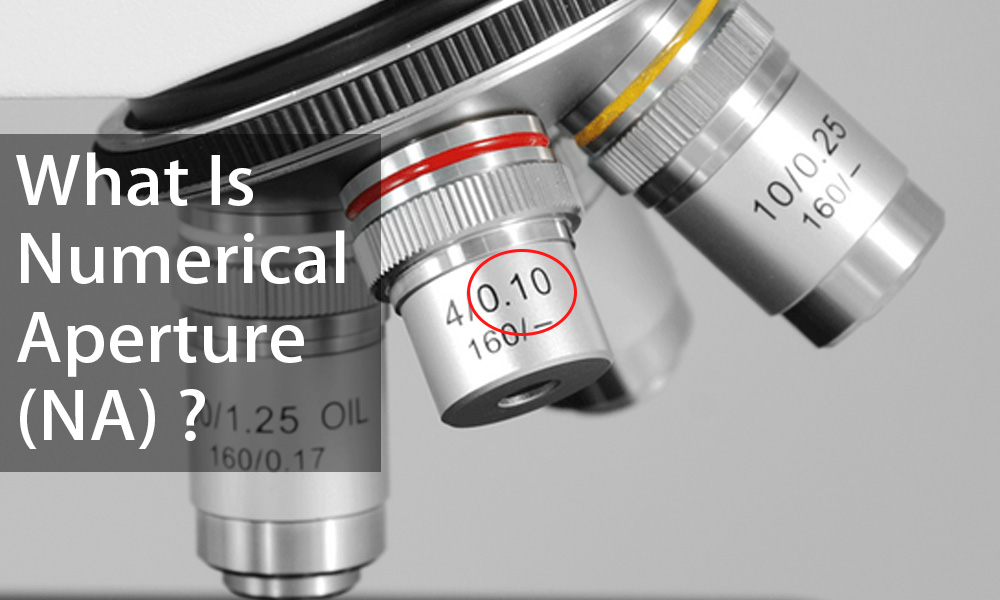
What Is Numerical Aperture (NA) in Optics?
Introduction
Numerical Aperture (NA) is one of the most fundamental parameters in optical system design, playing a critical role in determining the performance of microscopes, optical fibers, camera lenses, and numerous other optical instruments. Whether you’re working with a compound microscope in a laboratory, designing fiber optic communication systems, or developing high-resolution imaging equipment, understanding numerical aperture is essential for achieving optimal results.
In simple terms, numerical aperture describes the light-gathering ability of an optical system and directly influences key performance characteristics such as resolution, brightness, and depth of field. This comprehensive guide will explore the definition, formula, applications, and practical implications of numerical aperture across various optical systems.
What is Numerical Aperture?
Definition and Physical Meaning
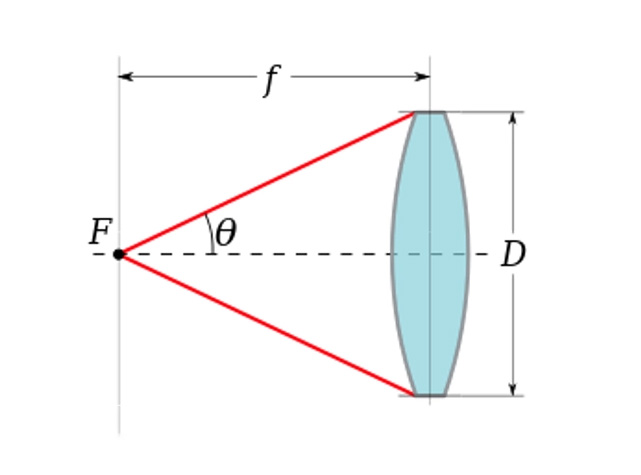
Numerical aperture is a dimensionless number that characterizes the range of angles over which an optical system can accept or emit light. It quantifies how much light can be gathered by a lens or optical fiber and is directly related to the cone of light that enters or exits the optical element.
The concept of numerical aperture was first introduced by Ernst Abbe in 1873, who developed the theoretical framework for understanding optical resolution in microscopy. Abbe’s work established the fundamental relationship between NA and the resolving power of optical instruments, which remains central to optical design today.
The Numerical Aperture Formula
The numerical aperture is calculated using the following formula:
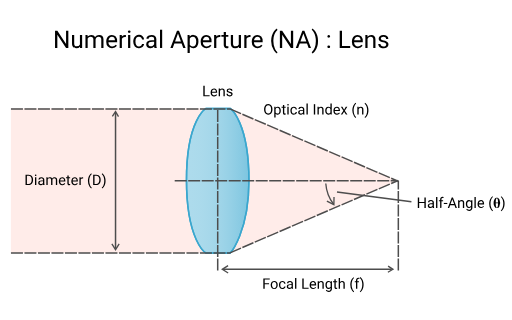
NA = n × sin(θ)
Where:
- n = refractive index of the medium between the lens and the specimen (or focal point)
- θ = half-angle of the maximum cone of light that can enter or exit the lens
For optical systems operating in air (n ≈ 1.0), the formula simplifies to NA = sin(θ). However, when using immersion media such as oil (n ≈ 1.515), water (n ≈ 1.33), or glycerin (n ≈ 1.47), the numerical aperture can exceed 1.0, significantly improving resolution and light-gathering capability.
Numerical Aperture in Microscopy
In microscopy, numerical aperture is arguably the most important specification of an objective lens, as it directly determines both resolution and image brightness. Understanding the relationship between NA and microscope performance is crucial for selecting the right objective for any application.
Resolution and Abbe’s Diffraction Limit
The resolving power of a microscope—its ability to distinguish between two closely spaced objects—is fundamentally limited by diffraction. Ernst Abbe established that the minimum resolvable distance (d) is given by:
d = λ / (2 × NA)
Where λ is the wavelength of light. This equation, known as the Abbe diffraction limit, shows that higher numerical aperture directly translates to better resolution. For example, with visible light at 550 nm wavelength:
- NA = 0.25: Resolution ≈ 1.1 μm
- NA = 0.65: Resolution ≈ 0.42 μm
- NA = 1.4 (oil immersion): Resolution ≈ 0.20 μm
Microscope Objective Lens Classifications
Microscope objectives are categorized by their magnification and numerical aperture. The following table shows typical NA values for common objective types:
| Objective Type | Magnification | Typical NA | Working Distance |
|---|---|---|---|
| Scanning Objective | 4× | 0.10 – 0.13 | 15 – 30 mm |
| Low Power Objective | 10× | 0.25 – 0.30 | 5 – 10 mm |
| Medium Power (High Dry) | 40× | 0.65 – 0.75 | 0.5 – 0.7 mm |
| High Power Objective | 100× (oil) | 1.25 – 1.4 | 0.1 – 0.2 mm |
Oil Immersion Objectives
Oil immersion objectives represent the highest-NA optics in conventional microscopy. By filling the gap between the objective lens and the specimen with immersion oil (typically with a refractive index of 1.515, matching that of glass), these objectives can achieve NA values up to 1.4 or higher.
The physics behind this improvement is straightforward: when light passes from a high-refractive-index medium (glass coverslip, n=1.515) into air (n=1.0), total internal reflection occurs at angles greater than the critical angle. This limits the maximum half-angle θ that can contribute to image formation. By using immersion oil with a matching refractive index, total internal reflection is eliminated, allowing a larger cone of light to be collected.
Working Distance Considerations
There is an inherent trade-off between numerical aperture and working distance—the distance between the front element of the objective and the specimen. High-NA objectives require the lens to be positioned very close to the specimen, which can present challenges for:
- Thick specimens or deep imaging applications
- Live cell imaging where physical contact must be avoided
- Applications requiring manipulation of the specimen during observation
Long working distance (LWD) objectives are designed to provide increased clearance while maintaining reasonable NA values, though they typically cannot match the NA of standard objectives at equivalent magnifications.
Numerical Aperture in Optical Fibers
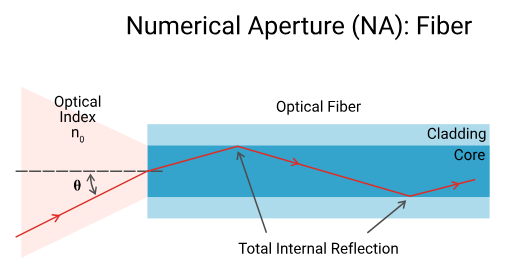
In fiber optic communication and sensing systems, numerical aperture describes the light-gathering ability of an optical fiber and determines the maximum angle at which light can enter the fiber core and still propagate through total internal reflection.
Fiber NA Formula
For a step-index optical fiber, the numerical aperture is determined by the refractive indices of the core (n₁) and cladding (n₂):
NA = √(n₁² – n₂²)
This formula is derived from Snell’s law and the condition for total internal reflection at the core-cladding interface. The NA determines the acceptance angle of the fiber—light entering at angles greater than the acceptance angle will not be confined to the core and will be lost.
Total Internal Reflection in Fibers
Total internal reflection (TIR) is the fundamental principle enabling light propagation in optical fibers. When light traveling in a denser medium (higher refractive index) strikes an interface with a less dense medium at an angle greater than the critical angle, it is completely reflected back into the denser medium.
The critical angle (θc) for total internal reflection is given by:
θc = arcsin(n₂/n₁)
Single-Mode vs. Multi-Mode Fibers
Optical fibers are classified based on the number of propagation modes they support, which is related to their NA and core diameter:
| Fiber Type | Typical NA | Core Diameter |
|---|---|---|
| Single-mode | 0.09 – 0.14 | 8 – 10 μm |
| Multi-mode (OM3/OM4) | 0.20 | 50 μm |
| Multi-mode (OM1) | 0.275 | 62.5 μm |
| High-NA specialty | 0.22 – 0.50 | Various |
Numerical Aperture in Camera and Imaging Systems
Relationship Between NA and F-Number
In photography and camera lens design, the concept of numerical aperture is related to but distinct from the more commonly used f-number (f/#). The relationship between NA and f-number for a lens focused at infinity is:
NA ≈ 1 / (2 × f/#)
For example, an f/2.0 lens has an NA of approximately 0.25, while an f/1.4 lens has an NA of approximately 0.36. This relationship shows why “faster” lenses (lower f-numbers) gather more light and produce shallower depth of field.
Field of View and Chief Ray Angle
In imaging system design, numerical aperture interacts with field of view (FOV) to determine the overall optical performance. The chief ray angle (CRA)—the angle at which the principal ray from an off-axis point strikes the image sensor—is particularly important for digital imaging systems where image sensors may have angular sensitivity limitations.
Machine vision cameras and telecentric lenses are designed with specific NA and CRA requirements to ensure consistent magnification across the field of view and accurate dimensional measurements.
Depth of Field Relationship
Numerical aperture has an inverse relationship with depth of field (DOF). Higher NA systems produce sharper images with better resolution but have significantly reduced DOF. This is expressed approximately as:
DOF ≈ λ / NA²
This trade-off is a fundamental consideration in applications ranging from fluorescence microscopy to industrial inspection systems.
NA in Advanced Optical Applications
Fluorescence Microscopy
Fluorescence microscopy relies heavily on high-NA objectives for several reasons:
- Higher NA collects more fluorescent emission, improving signal-to-noise ratio
- Better resolution enables visualization of subcellular structures
- Techniques like TIRF (Total Internal Reflection Fluorescence) microscopy specifically require NA > 1.4
When working with fluorophores such as DAPI, FITC, Texas Red, Cy5, or Alexa Fluor dyes, the choice of objective NA significantly impacts image quality and the ability to detect weak fluorescent signals.
Confocal and Two-Photon Microscopy
Advanced imaging techniques like confocal microscopy and two-photon microscopy place additional demands on numerical aperture. In confocal systems, the optical sectioning capability is proportional to λ/(NA²), meaning that high-NA objectives produce thinner optical sections and better axial resolution.
Two-photon microscopy, used extensively for deep tissue imaging and live cell imaging, benefits from high-NA objectives to maximize the two-photon excitation efficiency at the focal point while maintaining reasonable working distances for imaging through tissue.
Optical Coherence Tomography (OCT)
In OCT systems, numerical aperture determines the lateral resolution and depth of focus. Higher NA improves lateral resolution but reduces the imaging depth range due to decreased DOF. OCT system designers must carefully balance these parameters based on the specific application requirements, whether for ophthalmic imaging, endoscopic inspection, or industrial metrology.
Raman Spectroscopy and Microscopy
Raman spectroscopy systems benefit from high-NA collection optics to maximize the weak Raman scattered light. Raman microscopy combines spectroscopic analysis with high-resolution imaging, requiring careful optimization of NA for both excitation focusing and collection efficiency.
Practical Considerations for NA Selection
Application-Specific Requirements
Selecting the appropriate numerical aperture depends on the specific application requirements:
| Application | NA Considerations |
|---|---|
| High-resolution imaging | Maximize NA (1.2-1.4 with immersion) |
| Deep tissue imaging | Moderate NA (0.5-0.8) for DOF balance |
| Large field scanning | Lower NA (0.1-0.3) for working distance |
| Fiber coupling | Match source/fiber NA for efficiency |
| Laser focusing | High NA for small spot size |
Optical Material Considerations
The refractive index of optical materials plays a crucial role in achieving high numerical apertures. Common optical materials and their properties include:
- Crown glass (BK7): n ≈ 1.52, excellent for general-purpose optics
- Flint glass: n ≈ 1.62, used in achromatic doublets for chromatic aberration correction
- Fused silica: n ≈ 1.46, ideal for UV applications and high-power laser systems
- Sapphire: n ≈ 1.77, provides excellent durability and high refractive index
- Germanium: n ≈ 4.0, essential for infrared (IR) optics and thermal imaging
Conclusion
Numerical aperture is a fundamental parameter that influences virtually every aspect of optical system performance. From determining the resolution limits of microscope objectives to defining the light-gathering capability of optical fibers and camera lenses, understanding NA is essential for anyone working with optical systems.
Key takeaways include:
- NA directly determines resolution through the Abbe diffraction limit
- Higher NA improves light collection but reduces depth of field and working distance
- Immersion media enable NA values exceeding 1.0 by eliminating total internal reflection losses
- Application requirements should guide NA selection, balancing resolution, DOF, and working distance
Whether designing microscopy systems for fluorescence imaging, optimizing fiber optic communication links, or developing machine vision cameras for industrial inspection, proper consideration of numerical aperture will ensure optimal system performance.
