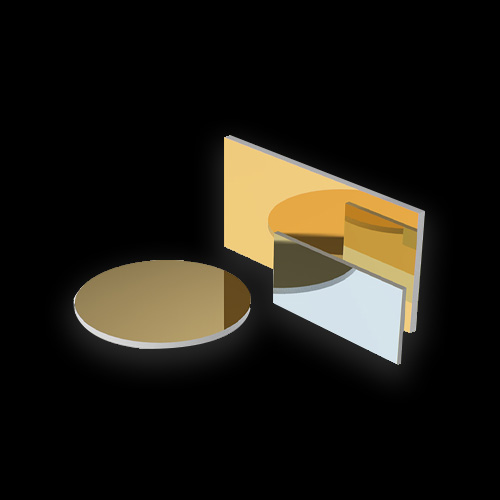
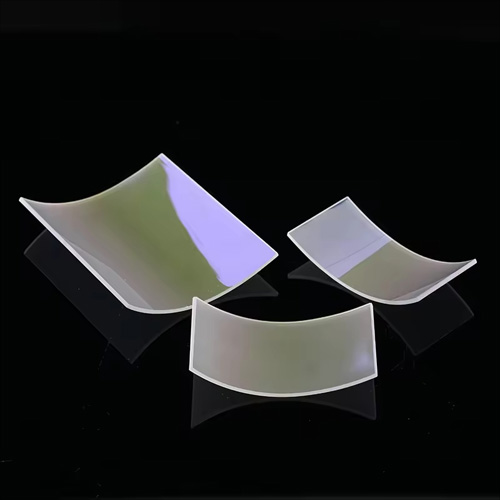
In many optical systems, infrared radiation is not a signal but rather a heat burden. The cold reflector is specifically designed to address this issue. It can reflect visible light wavelengths while transmitting infrared energy, thereby removing excess heat from the optical path without affecting the quality of the image or the beam. The cold reflector acts as a spectral management component, enabling the separation of useful light from the accompanying thermal radiation at an early stage of the system.

Spectral Characteristics and Design Considerations

Cold mirrors are specified by three primary optical regions:

  • Reflection band (visible region, typically 400–700 nm)

  • Transition region (cut-off wavelength range)

  • Transmission band (near-infrared and beyond)

The specific cutoff wavelength and slope steepness depend on the requirements of the system, including the spectral characteristics of the light source, the sensitivity of the sensor, and thermal constraints. The steeper the slope, the more complex the coating design and process control will be required.

Typical Cold Mirror Capabilities

Cold mirrors are fabricated on optical glass substrates selected for thermal stability and transmission performance. 

specifications include:

  • Substrate material: optical float glass or fused silica

  • Surface flatness: up to 3λ per inch

  • Surface quality: 80–50 scratch-dig

  • Angle of incidence: 45° ±5°

  • Reflection band: high reflectance in the visible range

  • Transmission band: high IR transmission beyond the cut-off wavelength

Exact specifications depend on wavelength range, system geometry, and thermal requirements.


Custom Hot and Cold Mirror Solutions

Hot and cold mirrors can be supplied for imaging systems, illumination optics, laser-based assemblies, and other optical platforms requiring effective spectral and thermal management. Please contact us to discuss application details or coating design limits. 
Contact Us Now