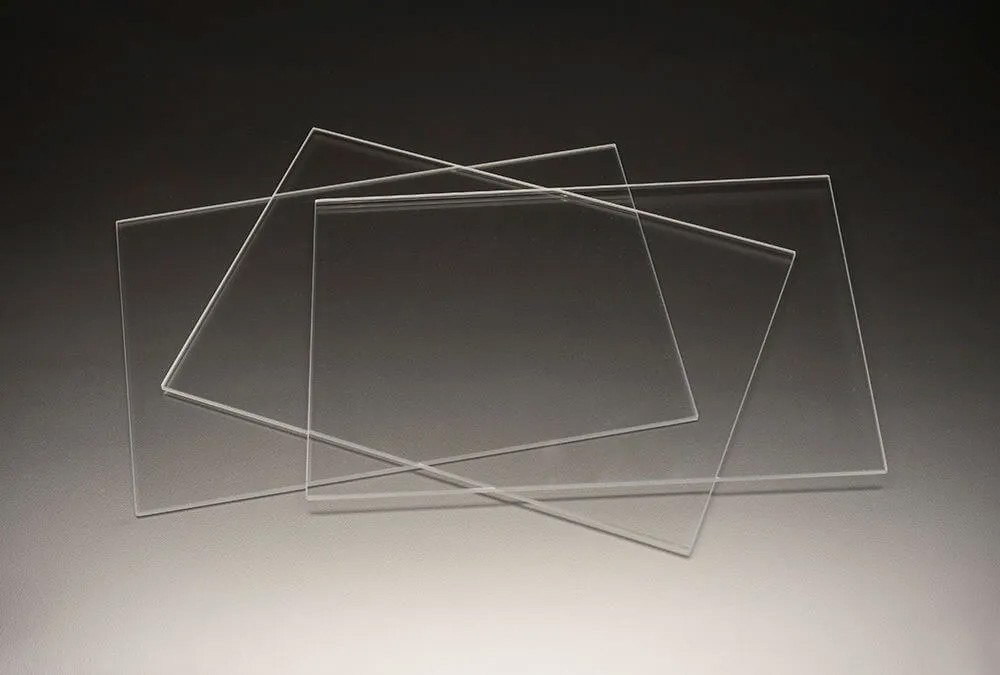
Fused quartz wiNdows
- Home
- portfolio
- Optical Window
- Fused quartz wiNdows
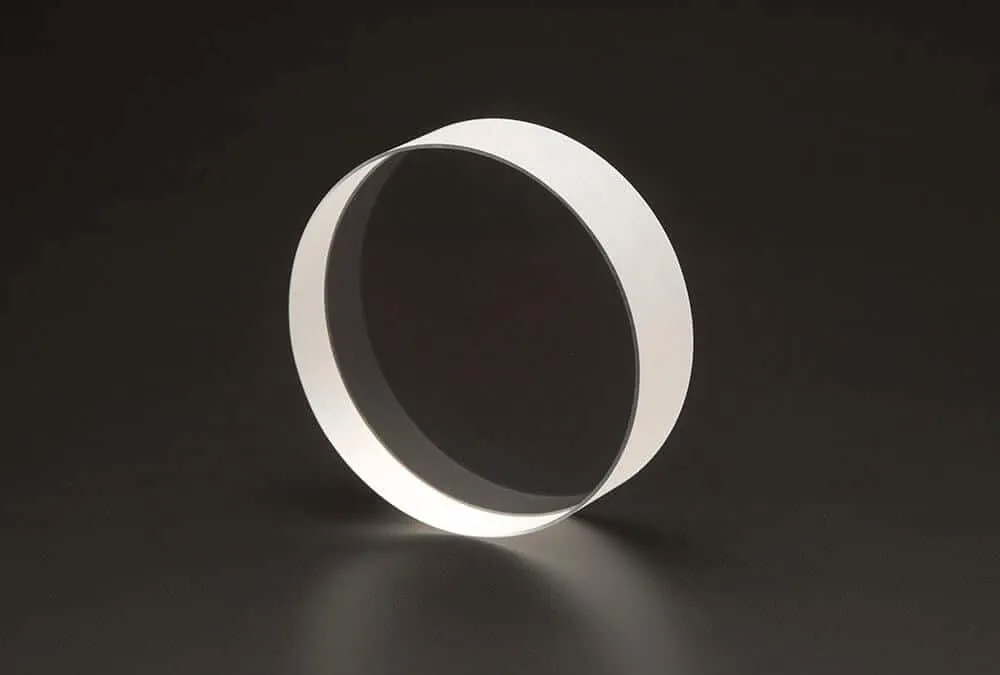
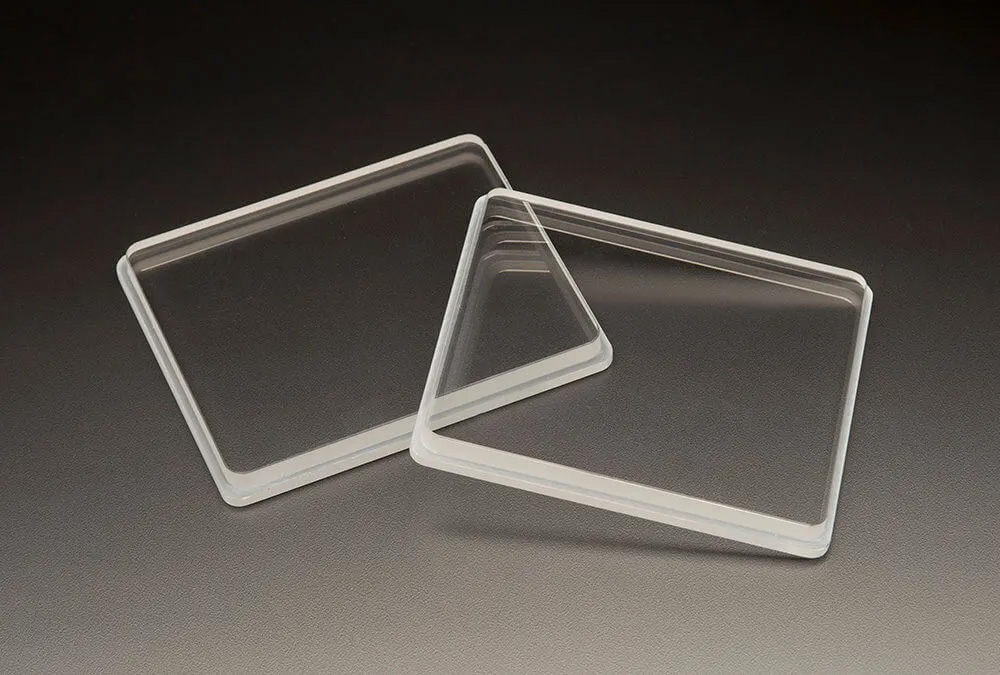
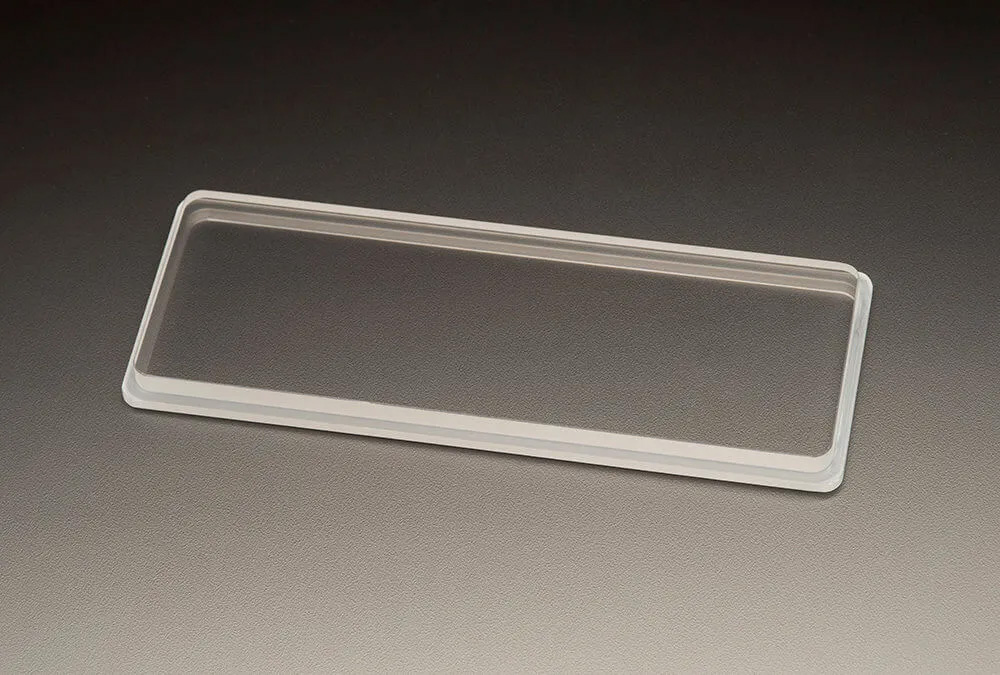
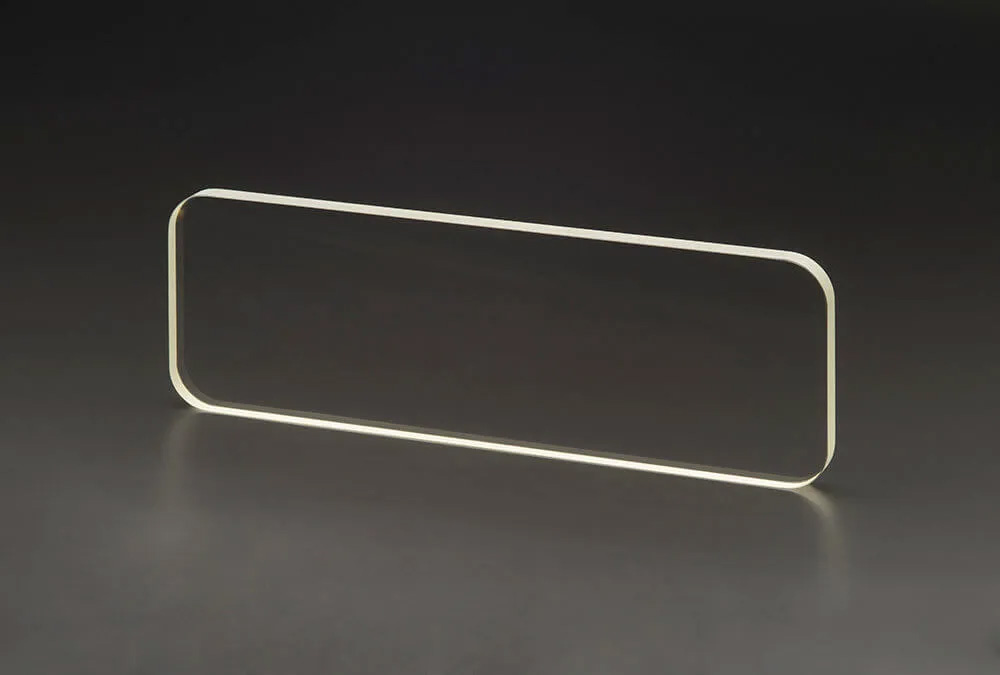
Fused Quartz Optical Windows
When optical equipment operates across wide temperature ranges, conventional optical glass expands and contracts, introducing mechanical stress, optical misalignment, and long-term reliability risks. Fused quartz addresses this problem directly. With an ultra-low thermal expansion coefficient of approximately 5.5 × 10⁻⁷ /°C, fused quartz remains dimensionally stable from –50 °C up to 1000 °C.
Many customers deploy fused quartz windows in vacuum deposition systems, plasma chambers, and high-temperature process tools where temperature swings are severe. In these environments, quartz windows consistently maintain structural integrity and optical alignment without failure.
Broad Spectral Transmission from Deep UV to Near Infrared
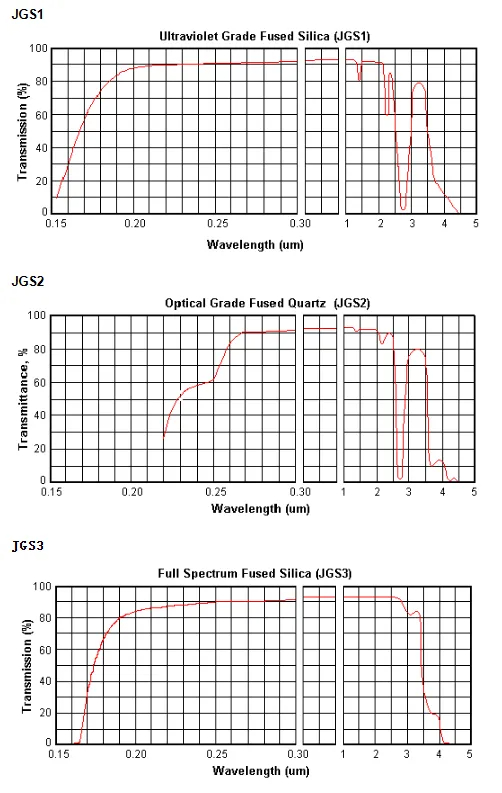
Fused quartz offers a wide transmission window spanning roughly 185 nm to 2500 nm, covering ultraviolet, visible, and near-infrared wavelengths within a single substrate material.
This broad spectral range allows one window material to serve multiple system requirements. Semiconductor process monitoring often demands deep-UV transparency, while spectroscopy and imaging systems require wide bandwidth coverage. Fused quartz enables both without material changes or complex redesigns.
Manufacturing Capabilities for Fused Quartz Windows
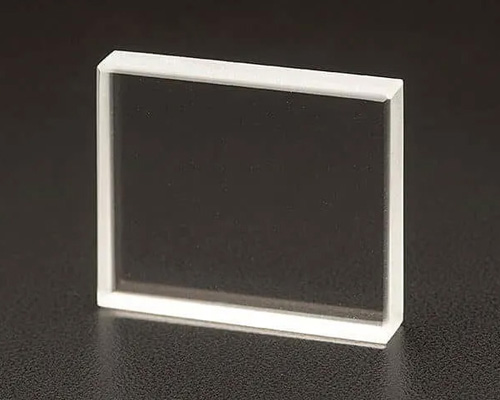
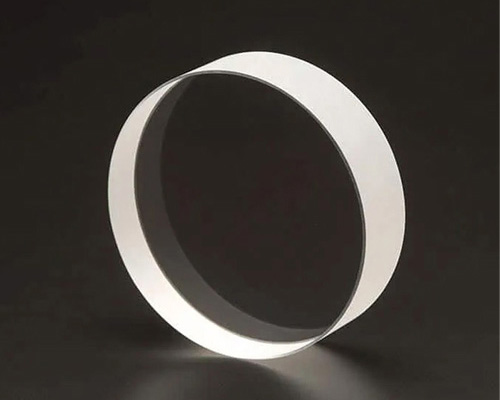
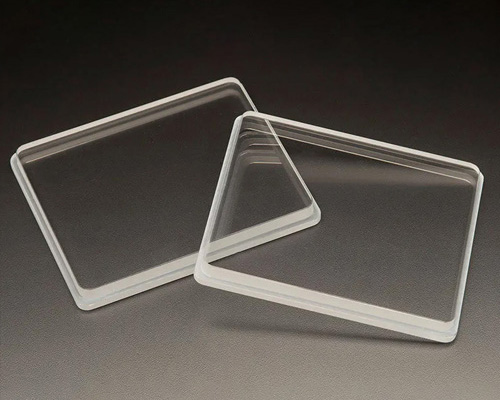
We manufacture fused quartz optical windows with controlled tolerances and optical quality suitable for both research-grade and industrial systems.
Typical manufacturing capabilities include:
Diameter tolerance: ±0.02 mm
Thickness range: 0.3 mm to 20 mm (custom thickness available)
Material grades:
JGS1 (UV-grade quartz)
JGS2 (optical-grade quartz)
JGS3 (infrared-grade quartz)
Surface quality: 20–10, 40–20, or 60–40 scratch-dig
Parallelism: down to a few tens of arcseconds
Clear aperture: typically >85–90%
Tighter tolerances and enhanced surface specifications can be supported for critical optical paths.
Why Fused Quartz Is Preferred in High-Performance Optical Systems
Fused quartz is chosen not because it is exotic, but because it consistently solves three major engineering challenges: UV durability, thermal resistance, and material purity.
Exceptional UV Transmission
High-grade quartz (especially JGS1) maintains strong transmission down to ~200 nm. This makes it indispensable for fluorescence imaging, UV lithography, and optical monitoring in semiconductor tools.
Outstanding Thermal Properties
Quartz can handle temperatures near 1000°C and survive rapid heating and cooling. For furnace windows, plasma chambers, and high-temperature reactors, this thermal shock resistance is a major advantage.
Very Low Auto-Fluorescence
In spectroscopy, bio-imaging, and photon-sensitive detection, low background fluorescence is essential—and quartz outperforms most optical glasses in this regard.
Stable Optical Constants
While fused quartz is not intended for deep-infrared or extreme-power laser systems, it performs exceptionally well for UV–VIS–NIR applications requiring clean transmission and minimal absorption.
Typical optical constants:
Refractive index (nd 587 nm): ~1.458
Transmission range: ~180–2500 nm depending on grade
High internal purity means low absorption and minimal fluorescence
What engineers appreciate is the material’s consistency: quartz is tough, clear, and stable even under long-term UV or thermal stress.