
High Reflectivity Mirror
- Home
- portfolio
- Optical Mirror
- High Reflectivity Mirror
High Reflectivity Mirrors for Precision Laser Systems
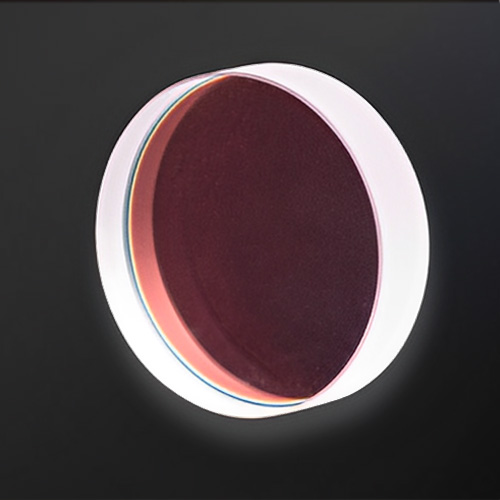
In high-power and precision laser systems, mirror performance is defined less by nominal reflectance and more by total optical loss, damage resistance, and long-term stability. High reflectivity mirrors are therefore engineered as low-loss optical elements rather than simple reflective surfaces, with dielectric coatings optimized for a specific wavelength, angle of incidence, and operating environment.
Reflectivity values above 99.9% are meaningful only when scatter and absorption are tightly controlled. For this reason, HR mirrors are typically specified and evaluated as part of a laser system rather than as standalone optical components.
Dielectric Coating Design and Mirror Types
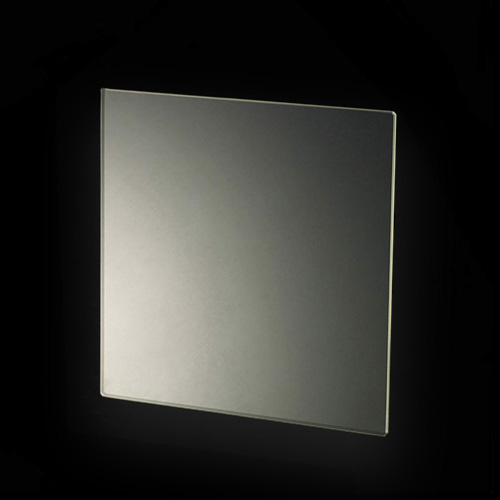
High reflectivity mirrors are realized using multilayer dielectric coatings rather than metallic reflection. These coatings consist of alternating high- and low-refractive-index layers deposited with tightly controlled thickness. High reflectance at the target wavelength is achieved through precise optical interference rather than material absorption.
We manufacture both:
Laser line HR mirrors, optimized for narrow wavelength bands centered on a specific laser line
Broadband HR mirrors, designed to maintain high reflectance over a defined spectral range
Ion beam sputtering (IBS) is commonly employed to produce dense, low-scatter coatings with excellent environmental stability and high laser damage thresholds.
Coating structure and deposition control
High reflectivity mirrors rely on multi-layer dielectric interference rather than metallic reflection. The coating structure is composed of alternating layers of high refractive index and low refractive index materials.
Due to the ion beam sputtering technology’s ability to generate films with high density, low absorption rate, and no obvious columnar structure, it is widely used in the manufacturing of high reflectivity laser reflectors. This technology directly increases the laser’s damage threshold and reduces the long-term coating drift phenomenon under high light flux.
According to application requirements, the coating can be optimized in the following aspects:
- Single-wavelength laser operation
- Narrow spectral bandwidth
- Specific incident angle and polarization state
Manufacturing and Quality Control Capabilities
High reflectivity mirrors are produced through tightly controlled polishing, coating, and inspection processes.
Typical manufacturing capabilities include:
| Parameter | Performance |
|---|---|
| Surface Quality | Down to 20–10 Scratch-Dig |
| Wavelength Coverage | Deep UV to Infrared |
| Peak Reflectance | > 99.995% at Designated Laser Wavelengths |
| Standard Laser Wavelengths | 266 nm, 355 nm, 532 nm, 1064 nm, 1550 nm |
| Customization Options | Custom Sizes, Shapes, and Coating Designs Available |
Custom High Reflectivity Mirror Solutions
Laser systems impose application-specific constraints that cannot be addressed with generic optics alone. Custom HR mirrors can be designed to accommodate unique wavelength combinations, incidence angles, polarization requirements, and power densities.
Design support is available to define coating structure, substrate parameters, and acceptance criteria appropriate to the target application.