
OD4 Notch Filter
- Home
- portfolio
- Optical Filter
- OD4 Notch Filter
OD4 Notch Filters
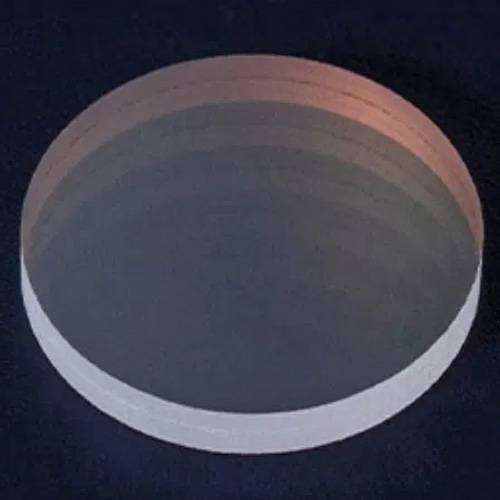
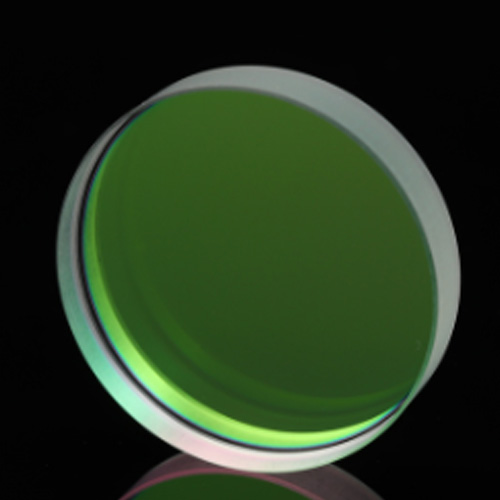
OD4 notch filters are narrowband rejection optical filters designed to suppress a specific wavelength or a very limited spectral region while maintaining high transmission on both sides of the blocked band. They are typically applied in optical systems where removal of a single laser line or narrow spectral interference is required without significantly affecting overall system throughput.
An optical density of OD4 corresponds to a minimum attenuation of 10⁴ at the notch wavelength, reducing transmitted intensity at that wavelength to 0.01% or less. This level of suppression is suitable for many imaging, sensing, and analytical systems where moderate laser rejection is sufficient.
Understanding OD4 Notch Filters
Within the broader family of optical filters, notch filters are designed to remove a narrow spectral component while allowing the remaining spectrum to pass with minimal loss. Unlike bandpass or edge filters, notch filters focus on precise wavelength suppression rather than broad spectral separation.
For OD4 notch filters, the most critical specification is the center wavelength of rejection, defined as the wavelength at which maximum attenuation occurs. At this wavelength, the filter achieves an optical density of OD4, corresponding to at least 99.99% attenuation of the incident light.
A properly designed OD4 notch filter features:
A narrow and well-defined rejection band
High optical density at the blocked wavelength
High transmission on both sides of the notch
The spectral regions are commonly referred to as the rejection band (notch region) and the transmission bands (pass regions).
| Parameter | Specification |
|---|---|
| Optical Density OD (Average) | ≥4.0 |
| Surface Quality | 80-40 |
| Thickness Tolerance (mm) | ±0.1 |
| Transmitted Wavefront, RMS | <1λ |
| Coating | Upon Request |
| Transmission (%) | ≥90 |
| Reflection at CWL (%) | 99 |
| Clear Aperture | 90% |
Custom OD4 Notch Filter Options
OD4 notch filters can be supplied as standard designs or customized to meet specific system requirements. Customization options include:
User-specified notch center wavelength
Narrow or ultra-narrow rejection bandwidth
UV, VIS, or NIR spectral optimization
Custom dimensions, shapes, and substrate materials
Higher optical density levels (OD5, OD6) when increased suppression is required
Custom designs take into account angle of incidence, laser power, polarization effects, and environmental conditions to ensure proper integration into the optical system.