
Shortpass Filters
- Home
- portfolio
- Optical Filter
- Shortpass Filters
Shortpass Filters
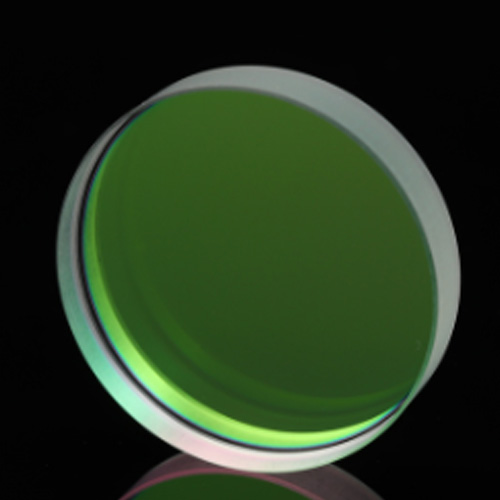
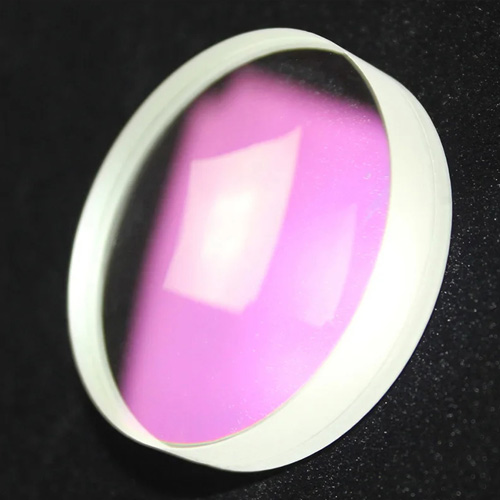
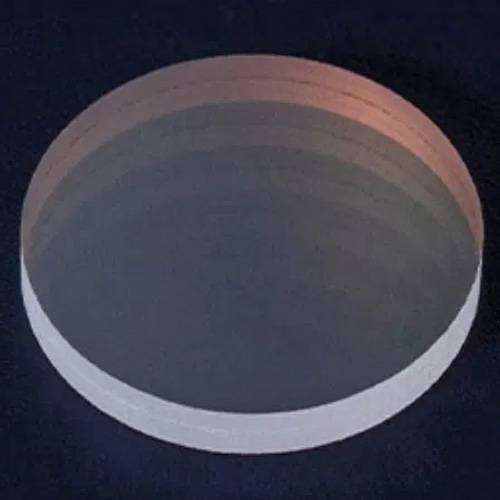
Shortpass filters represent a specialized class of high-transmission edge filters, precisely designed to transmit shorter wavelengths while efficiently suppressing longer wavelengths. At Star-Optics, we manufacture high-quality short wave pass edge filters intended for a broad spectrum of applications, including medical systems, scientific research, and defense-related optical platforms.
Our shortpass filters are commonly produced using durable optical materials such as colored glass and are distinguished by their high optical transmission performance. They are suitable for use across ultraviolet, visible, and infrared wavelength ranges. Designed to operate reliably under varying environmental and operating conditions, these high-transmission filters offer excellent mechanical stability and are capable of withstanding routine handling and standard cleaning procedures.
Comprehending Shortpass Filters
Edge filters, encompassing both shortpass and longpass designs, are intended to selectively transmit a defined spectral region while rejecting another. For shortpass optical filters, the critical transition between transmission and rejection is defined by the cut-off wavelength, which corresponds to the wavelength at which the filter achieves 50% transmission. This cut-off wavelength is the primary performance parameter of a shortpass filter and is typically specified as a single numerical value, such as 600 nm.
A properly designed shortpass filter exhibits a steep spectral edge, ensuring that wavelengths longer than the cut-off are effectively blocked. Light at wavelengths shorter than the cut-off is transmitted with minimal attenuation or spectral distortion. These regions are commonly described as the rejection range and the transmission range, respectively.
Proper Mounting of Your Shortpass Filter
Although shortpass filters are capable of filtering light in either direction with negligible impact on transmitted intensity or spectral response, we recommend installing the filter with the coated surface facing the light source. This orientation reduces the risk of thermal stress or coating damage and helps minimize potential thermal effects caused by intense out-of-band radiation.
Standard shortpass filters are generally designed for operation at normal incidence. However, adjusting the angle of incidence can be used to fine-tune the cut-off wavelength when required. As a general rule, a change of approximately 45 degrees in the angle of incidence will result in a shift of the cut-off wavelength by about 10%.
Custom Shortpass Filters
Star Optics offers fully customized shortpass filter solutions to meet specific optical system requirements. Custom options include:
Custom cut-off wavelengths and transition slopes
Enhanced blocking or laser-compatible designs
Custom sizes, thicknesses, and substrates
Environmental and high-durability coatings
Our engineering team works closely with customers to ensure each shortpass filter integrates seamlessly into the optical system—from prototype development to volume production.
Contact Star Optics to request technical support, review in-stock options, or obtain a quotation for custom shortpass optical filters.